Know what to
test next.
Give it the vehicle, the symptom and your readings. Auto Diagnostics walks you through the circuit one measurement at a time, and tells you why you are taking each reading and what the number means.
2019 Ford F-150
5.0L V8 · Starting & Charging
Starter does not crankPower at the starter B+ terminal
B+ is fed straight from the battery and is live all the time. If it is not, nothing after it can work.
Within 0.5 V of battery voltage
Electrical is where the guessing starts.
A mechanical fault usually shows you something. An electrical fault does not. A tech three years in can pull a starter in forty minutes, but deciding whether the starter is even the problem is a different skill, and it is normally learned by standing next to someone who already has it.
The diagram will not tell you where to start
A schematic shows you the circuit. It does not tell you which end of it to put the probe on first, or which test rules out the most.
Parts get swapped instead of tested
A starter, then a relay, then a battery. Three parts and half a day to find a corroded ground strap that a two minute voltage drop would have caught.
The person who knows is busy
On second shift there is often nobody to ask, and when there is, the answer you get is a conclusion rather than a method you can use next time.
A circuit, walked in order.
Describe the job
Year, make, model, engine. The system and the symptom. Any codes, and anything you already tested so it does not send you back over it.
2019 · Ford · F-150 · 5.0L V8
Starter does not crank
Take one measurement
One test at a time. Where to put the probes, what the reading should be, and why this test comes before the others.
Battery voltage while cranking
Probes stay on the posts. Hold START for five seconds and record the lowest number you see.
Record it, get the next step
Your reading picks the branch. Nothing moves forward without a value behind it, and every value stays on the case.
Barely any drop. Suggests the starter is not drawing current, so check power, ground and the start signal.
Run the F-150 case.
This is the actual flow with the demo case loaded. Enter a reading and see where the tree takes you.
2019 Ford F-150
5.0L V8 · 118,400 mi
Battery open circuit voltage
Everything in the crank circuit depends on the battery being charged. Testing it first stops you chasing a starter fault that is really a flat battery.
12.6 V or higher is fully charged. 12.4 V is around 75 percent. Below 12.4 V, charge it and retest before going any further.
It gives you the method, not just the answer.
Every step carries its reasoning. Why this test comes now, what the number should be, and what each possible result rules in or out. A tech who runs ten cases has walked ten circuits properly, not looked up ten answers.
The goal is a tech who eventually stops needing the next step spelled out.
What each result means
Ground path is good
Power in, signal in, ground good, still no crank. That leaves the starter as the most likely candidate.
Too much resistance in the return
Not enough current is getting back to the battery. Clean the engine to body strap before condemning anything else.
Open or near open ground
Almost the full battery voltage is being dropped across the ground path. Trace the strap and its mounting points.
Take this reading with the circuit loaded. An unloaded ground almost always looks fine.
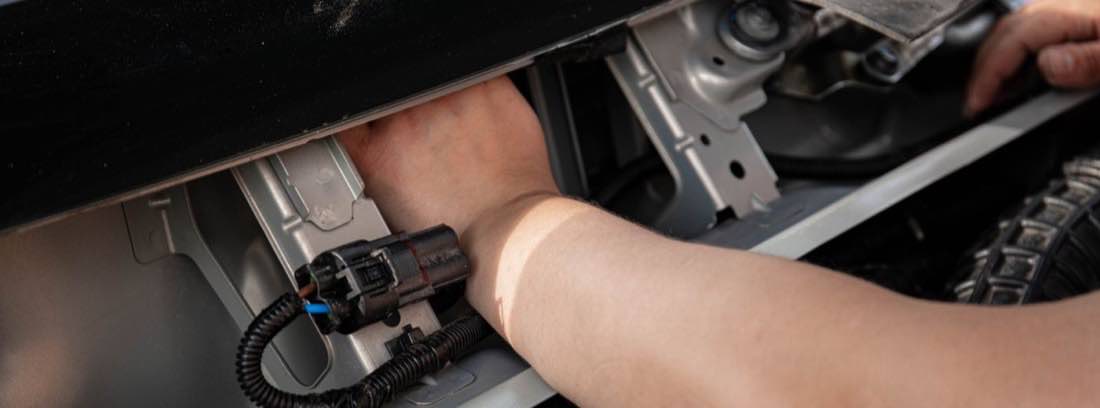
Made to be used standing up, one hand, next to the vehicle.
Around the diagnosis.
The guided flow is the centre of it. These are the surfaces a tech ends up in between jobs.
The procedures themselves, browsable outside a live job. Each one is a decision tree, versioned and open to correction.
The theory a tech actually needs at the probe, written short and tied to the tests that use it.
Each topic links back into the procedures where the idea gets used, so it is read in context rather than as a course.
Every job you ran, with the vehicle, the readings you took and how it ended. Pick a case back up where you left it.
No crank. Corroded engine ground strap, 1.1 V drop.
6 tests · 12 Aug
Battery drain overnight. Draw at 480 mA after 40 min.
3 tests · 4 Sep
Procedures first. Cases on top.
Every procedure is a structured decision tree rather than an article, so it can be versioned, corrected and extended by the people who use it. Completed cases sit alongside them: the vehicle, the readings, the branch taken and the outcome.
Over time that shows which branches actually resolve faults on which platforms, and the ordering of tests gets sharper. Assisted diagnosis belongs on top of that layer, once there is something underneath it worth trusting.
Authored trees with tests, expected values, and branches for every result. Editable, versioned, attributable.
What techs actually measured on actual vehicles, and which branch ended the job.
Tests that resolve faults fastest on a given platform move up the tree. Dead ends get pruned.
Suggestions that can point at the procedure and the cases behind them. Not a chat box with an opinion.
Start with the F-150 that will not crank.
Five tests, about eight minutes, and you will know whether it is the starter before you pull anything.